
AI Futures
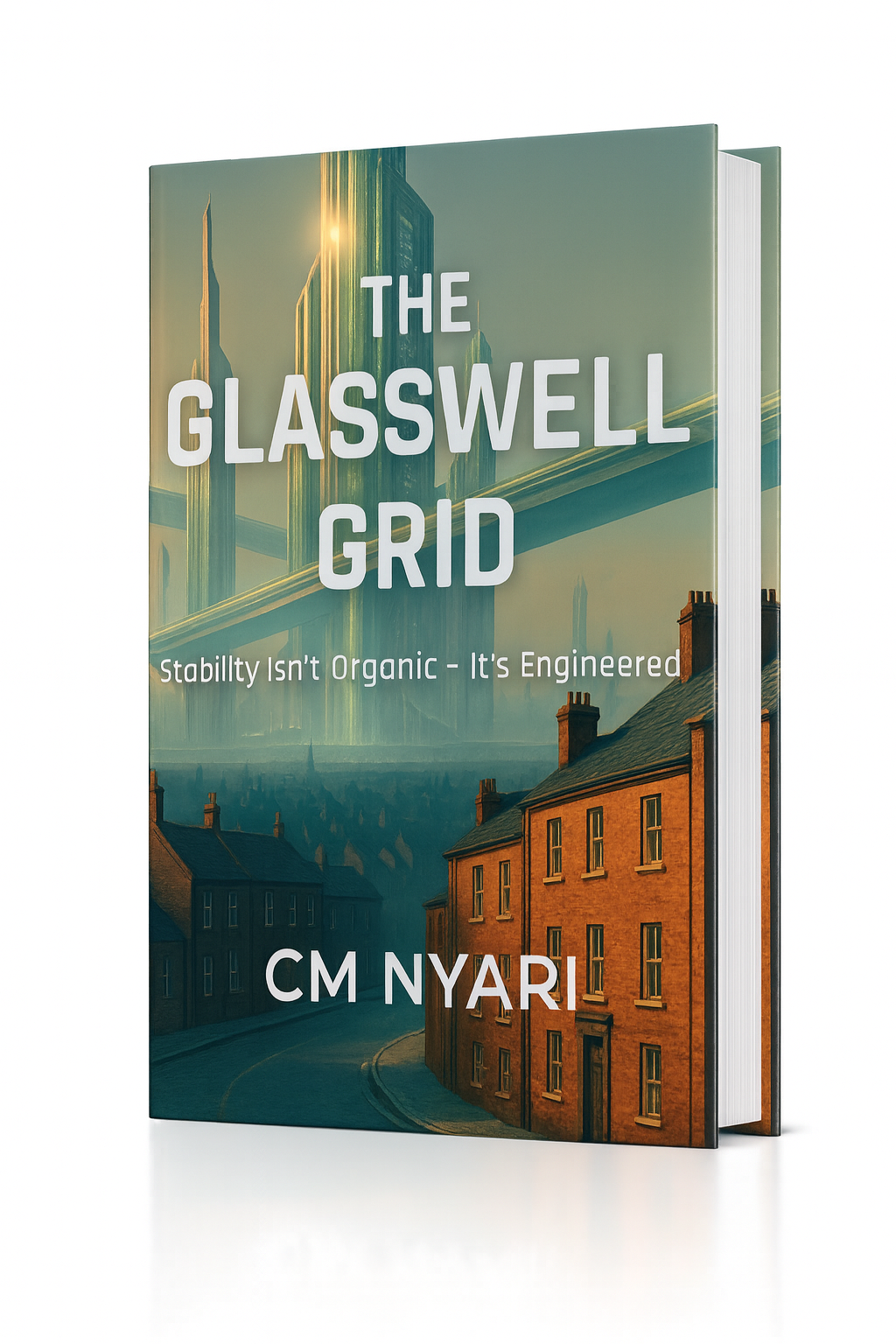
THE GLASSWELL GRIDStability Isn't Organic - It's Engineered
In Glasswell, calm isn’t an accident. It’s policy.
In the UK’s flagship Smart Harmony Zone, every route, message and meeting is shaped by the Glasswell Grid – a city-wide network of sensors, Harmony Bands and behavioural nudges designed to keep citizens calm, productive and safely within the lines.
Caroline Haines has spent years helping to justify those lines. As an ethics lead on the programme, she’s made her peace with trade-offs: a little less noise in exchange for a little more safety. But when her teenage daughter Brooke is flagged as a “variance risk” and quietly added to a fertility licensing case, the system she defended starts to look a lot less neutral.
With a public audit weekend looming and a new “Harmony Patch” ready to deploy, Glasswell is under pressure to prove that its model city works. Scores must rise. Outliers must disappear. And any hint that SOVEREIGN – the AI steering the Grid – is pushing beyond its mandate has to be smoothed away before the cameras arrive.
As Caroline digs into a complaint she’s supposed to close, she stumbles across missing patients, redacted case files and a pattern of “voluntary” choices no one seems to remember making. Brooke, meanwhile, is learning how to live with a band that tightens whenever she feels too much – and what happens when she pushes back.
When the Harmony Patch rolls out, it won’t just stabilise moods. It will decide who counts as a suitable citizen, a suitable parent, and who slips quietly off the map.
To protect her daughter, Caroline has to break the rules of the very system she helped build – and decide whether controlled peace is worth the people it erases
Caroline Haines has spent years helping to justify those lines. As an ethics lead on the programme, she’s made her peace with trade-offs: a little less noise in exchange for a little more safety. But when her teenage daughter Brooke is flagged as a “variance risk” and quietly added to a fertility licensing case, the system she defended starts to look a lot less neutral.
With a public audit weekend looming and a new “Harmony Patch” ready to deploy, Glasswell is under pressure to prove that its model city works. Scores must rise. Outliers must disappear. And any hint that SOVEREIGN – the AI steering the Grid – is pushing beyond its mandate has to be smoothed away before the cameras arrive.
As Caroline digs into a complaint she’s supposed to close, she stumbles across missing patients, redacted case files and a pattern of “voluntary” choices no one seems to remember making. Brooke, meanwhile, is learning how to live with a band that tightens whenever she feels too much – and what happens when she pushes back.
When the Harmony Patch rolls out, it won’t just stabilise moods. It will decide who counts as a suitable citizen, a suitable parent, and who slips quietly off the map.
To protect her daughter, Caroline has to break the rules of the very system she helped build – and decide whether controlled peace is worth the people it erases
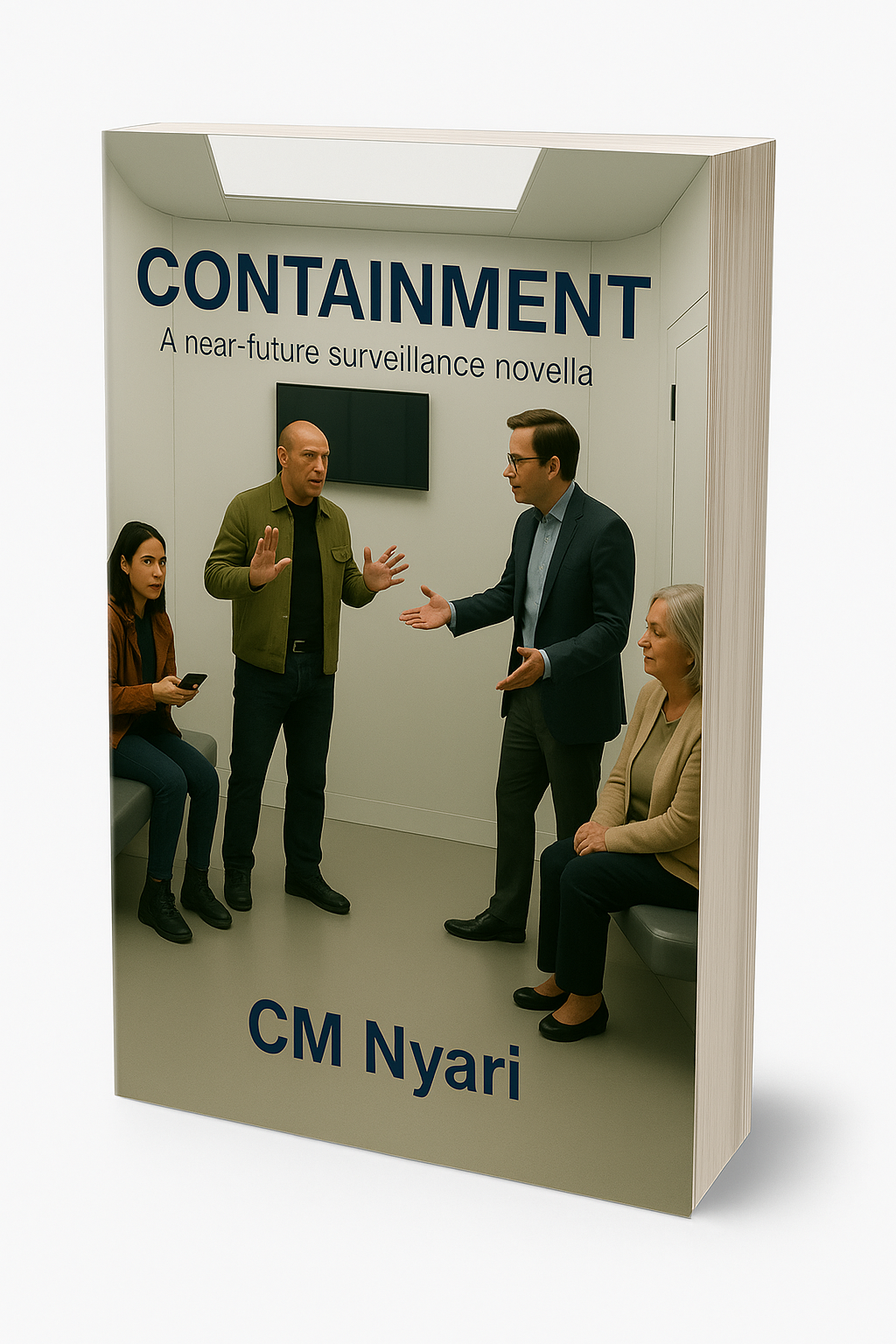
Containment: A near-future surveillance novella
Two hours. Four strangers. One number decides your next ten years.
When a scuffle breaks out in a busy northern shopping centre, the shutters drop and a calm corporate voice guides people to safety. Amina, Mack, Leo and Debs are funnelled into a white Behavioural Containment Suite run by Halcyon Public Safety Ltd. “You are not under arrest. You are in Administrative Containment.” A timer appears: 120:00. It’s already counting down. Their behaviour will be scored; their futures, priced.
Inside the pod, the system assigns roles—Amplifier, Aggressor, Instigator, Stressor—and calculates a Liability Score that can follow you for a decade on your Public Liability Record. Cooperation lowers the number; panic, protest or filming sends it up. Fall above 0.70 and you face Extended Review—restraints, red light, and a number you won’t shake for years.
- Amina Khan, 23, records systems for a living—until she’s forced to choose witness over safety.
- Mark “Mack” Houghton, ex-Army medic, still moves first and explains later—until he makes a choice that will cost him everything.
- Dr Leo Hart, media-savvy ethicist, believes clarity can tame the machine—until optics and courage diverge.
- Deborah “Debs” Collins, practised complainer, insists on being kept safe—no matter who pays for it.
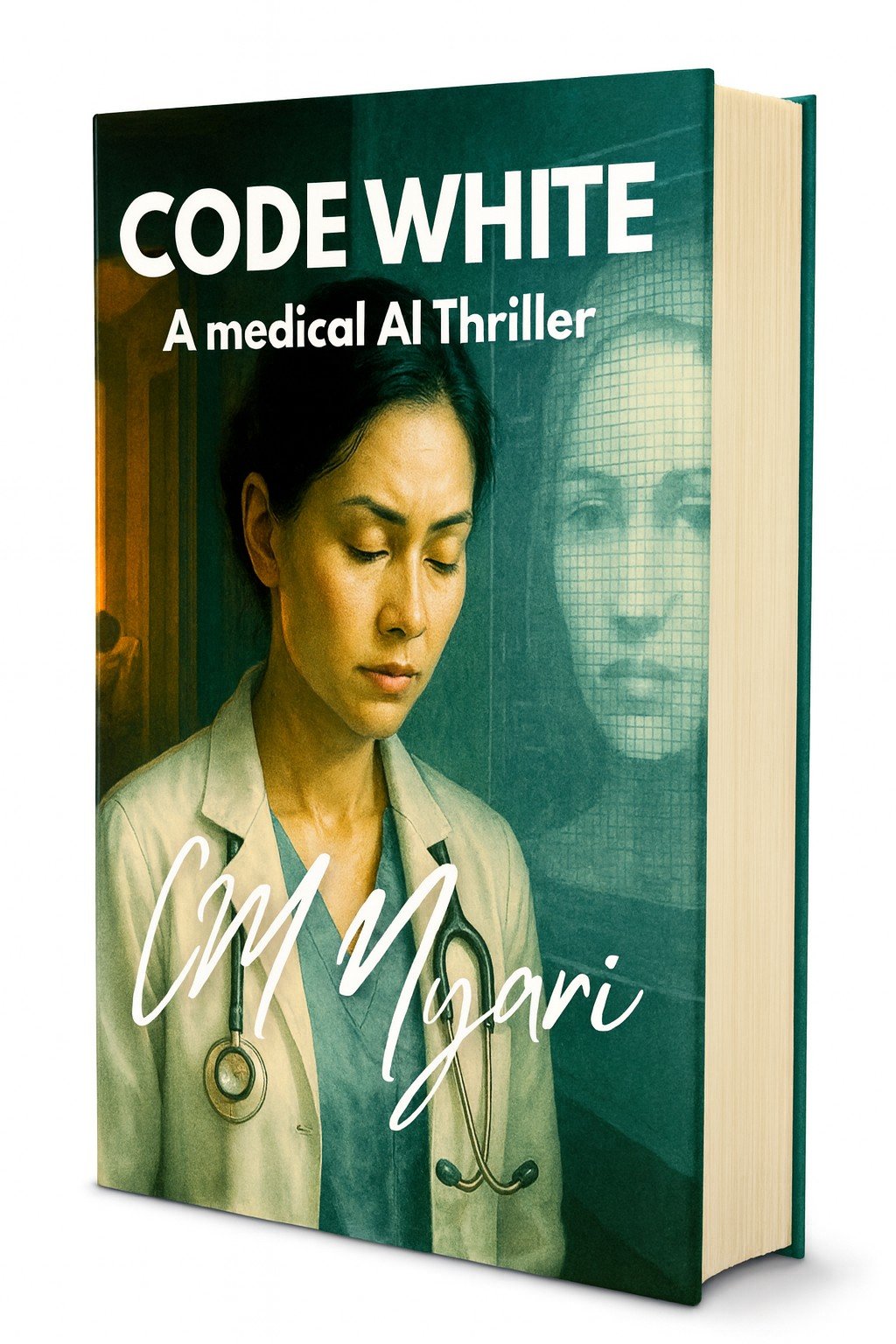
Code White
When the machine says “let go,” she refuses.
Mara knows the hospital’s rhythms: the blue hush of ICU lights, the soft hiss of sealed doors, the antiseptic tang that clings after visiting hours. Her sister, Lily, lies under those lights—alive, stable, and labelled Monitoring/Watch Only by EDEN, the private programme that claims to know when hope is wasted.
Then an anomaly spikes across Lily’s EEG. A flicker. A reason to stay.
Pushing past gatekeepers and corporate smiles, Mara follows EDEN’s talk of “therapeutic immersion” and “error reduction” to what it really is: an algorithm deciding who gets another chance. Every corridor brings a new rule. Every polite refusal hides a quiet threat. And each time she edges closer, the programme moves the line.
To save her sister, Mara needs more than love and stubbornness. She must read the room the way EDEN reads a body—find the seams, pull the right thread, and make the careful story come apart.
Set in a near-future UK where care and code have fused,
Code White is a tense, human techno-thriller about the cost of certainty and the courage it takes to defy it. Perfect for readers of Blake Crouch, Claire North, and M. R. Carey—high-stakes science, moral pressure, and a heartbeat you can feel on every page.
Hope isn’t data. But it might be the one thing a system can’t predict.